
What Parts of Your Wedding Need a Planner?
Jan 30, 2026
Disclosure: This post may contain affiliate links and advertisements. I may earn a commission at no additional cost to you. Content is supported with Ai and is for entertainment purposes only.
Knowing When to Dive In Your Wedding Planning — and When to Step Back
I really believe there are moments in wedding planning when it feels empowering to dive in, and other moments when holding back is the kindest thing you can do for yourself. Not every task deserves your energy, and not every decision needs to be a late-night spiral. Creating balance between excitement and responsibility is often what turns wedding planning from overwhelming into empowering.
Some couples love spreadsheets and vendor calls. Others love creative details but freeze at contracts. Many people are somewhere in between. That’s where the idea of a wedding planner becomes less about “do I need one?” and more about which parts of this deserve support so I can stay present for the moments that matter most.
This guide is here to help you decide what parts of your wedding you might want help with, what you may want to keep for yourself, and how to make those choices in a way that protects your wedding joy!
A Clear Look at What You Might Want a Wedding Planner For
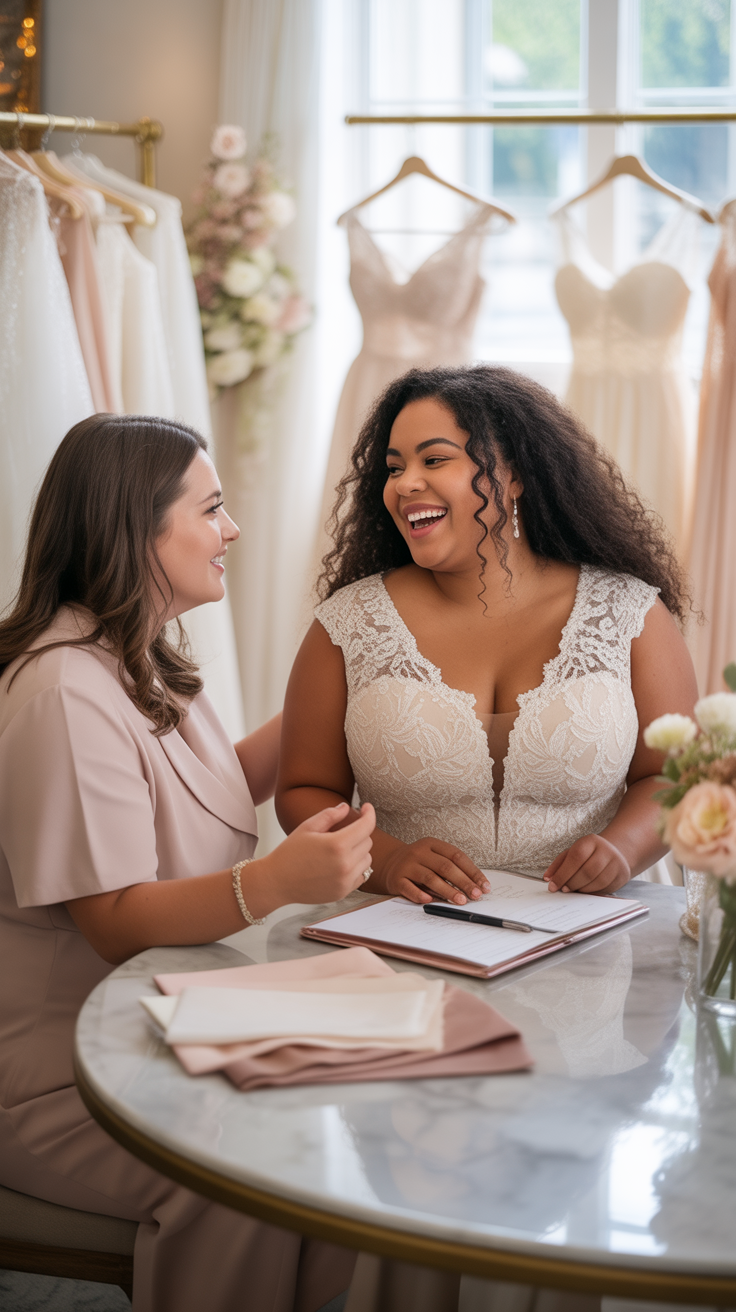
Not every wedding needs full planning support, but nearly every wedding benefits from some level of structure. Here are areas where many couples find a planner genuinely helpful:
Vendor coordination
Managing timelines, deposits, contracts, and follow-ups can become a job of its own. A planner can handle communication so you’re not answering emails during dinner.
Timeline creation and flow
Knowing when hair and makeup should start, when vendors arrive, and how long transitions actually take can be tricky without experience.
Venue logistics
Some venues come with rules, preferred vendors, and strict setup windows. A planner helps navigate those without last-minute stress.
Design cohesion
Turning Pinterest inspiration into something that feels unified in real life often requires someone who can see the full picture.
Problem-solving on the wedding day
When something unexpected happens — and something always does — having someone else handle it keeps you out of decision-mode.
Family dynamics and boundaries
A planner can act as a neutral buffer when opinions get loud or emotions run high.
Budget tracking
Not in a restrictive way, but in a “let’s make sure this still aligns with your priorities” way.
A helpful way to think about this list is to notice which items make you feel relieved — and which ones you actually enjoy handling yourself.
Understanding the Different Types of Wedding Planners (So You Don’t Overbook)
Wedding planning support is not one-size-fits-all. Knowing what’s available helps you choose what fits your personality and season of life.
Full-Service Wedding Planner
This option supports you from early planning through the wedding day. They often help with vendor selection, budget tracking, design guidance, timelines, and execution. This is ideal if you want guidance from start to finish or have limited time.
Partial Wedding Planner
A partial planner steps in once some decisions are already made. This can be helpful if you’ve booked a venue and a few vendors but want help tying everything together.
Month-Of or Day-Of Coordinator
Despite the name, these planners usually begin working with you several weeks before the wedding. Their focus is execution — timelines, vendor coordination, and day-of flow.
Design-Focused Planner or Stylist
Some planners specialize in aesthetics and layout rather than logistics. This can be helpful if you love planning but want help with visual cohesion.
Venue-Provided Coordinator
Often included with your venue, this role usually focuses on the venue’s needs rather than your entire wedding. It can still be valuable, but it’s important to understand the scope.
Understanding these options lets you choose support that complements what you’re already doing well.
How to Decide What Kind of Planning Support You Actually Need
Instead of asking, “Should I hire a planner?” try asking questions that are more personal:
• What parts of planning energize me?
• What parts make me feel anxious or drained?
• What decisions feel heavy instead of exciting?
• Where do I want to be fully present on the wedding day?
For example, if you love choosing decor but feel overwhelmed by schedules and logistics, a coordinator may be the perfect fit. If vendor communication stresses you out but design excites you, partial planning with design support might feel balanced.
There’s no “right” choice here — only choices that protect your time, energy, and emotional experience.
The Heart of the Decision: A Guided Mind-Mapping Activity to Clarify What You Need
This is where everything starts to click. Instead of guessing or comparing yourself to other weddings, this activity helps you visually map what your wedding needs — and where support would feel most meaningful.
Step 1: Create Your Planning Circle
Start with a blank page or large piece of paper. In the center, write:
“Our Wedding Experience”
This keeps the focus on how you want to feel, not just what needs to get done.
Large Sketch Easel Pads make it easy. Having space to spread out your thoughts helps you see connections more clearly. Bigger paper allows ideas to breathe instead of feeling cramped. It also makes the activity feel intentional rather than rushed.
Step 2: Add Major Planning Categories Around the Center
Draw branches outward and label them with major areas like:
1. Vendors
2. Timeline & Flow
3. Design & Decor
4. Budget & Payments
5. Guest Experience
6. Family & Communication
7. Wedding Day Execution
These are big buckets — don’t overthink them yet.
Step 3: Break Each Category Into Real Tasks
Under each category, list actual tasks. For example:
Vendors
• Research
• Email communication
• Contracts
• Final confirmations
Design & Decor
• Color palette
• Rentals
• Table layouts
• Setup logistics
This step helps you see how many moving pieces live under each category.
Step 4: Color-Code Based on How You Feel About Each Task
Here’s where clarity starts to show up.
Use three colors:
• Green: I enjoy this or feel confident handling it
• Yellow: I could do this, but it takes effort or time
• Red: This stresses me out or feels overwhelming
Soft-tone highlighters help! Color-coding emotions is easier when the colors feel calm and inviting. Soft tones keep the process grounded and reduce visual overwhelm. They also make reviewing your map later more enjoyable.
Fine-tip pens matter when you’re breaking tasks down into specifics. Fine-tip pens help keep lists readable without crowding your page. This makes your map useful beyond the first session.
Step 5: Look for Clusters of Red and Yellow
Notice patterns. If multiple red items live under timeline and logistics, that’s a strong sign where a planner could help. If design is mostly green, that’s something you may want to keep.
This is often the moment when couples realize they don’t need everything — just targeted support.
Step 6: Decide What You Want to Release
Circle the red and yellow clusters you’d gladly hand off. Write next to them:
“Support here would help me enjoy this more.”
That sentence alone can remove a lot of guilt.
Heart sticky notes let you move tasks around as clarity grows with love. They’re perfect for ideas you’re unsure about or tasks that may change. This keeps your planning adaptable instead of rigid.
Step 7: Translate the Map Into a Planner Role
Now your mind map becomes a guide:
• Red clusters across many categories → full or partial planning
• Red clusters mainly in execution → month-of coordination
• Red clusters mainly in design or logistics → specialty support
Instead of guessing, you’re choosing based on awareness.
FAQ: Common Questions About Hiring a Wedding Planner
Do I still need a planner if my venue includes coordination?
Venue coordinators focus on the venue itself. A planner focuses on you and how everything flows together.
Is hiring a planner only for large weddings?
Not at all. Smaller weddings often have tighter timelines and fewer buffers, which can actually increase the need for coordination.
Can I hire a planner later in the process?
Yes. Many planners offer partial or month-of services specifically for couples who start planning on their own.
Will a planner take over my vision?
A good planner supports your ideas rather than replacing them. Communication and fit matter more than the service type.
Is it okay to only want help on the wedding day?
Absolutely. Wanting to be present is reason enough.
A Simple Planner or Notebook
Once your map is complete, transferring insights into a notebook helps turn awareness into action. It becomes a reference point when talking with planners. It also keeps your thoughts organized in one place.
Loved this content? There’s more waiting in these fun posts:
Choosing Support That Lets You Celebrate Fully
Deciding what parts of your wedding you need a planner for isn’t about doing more — it’s about protecting the moments you want to remember clearly. When support is aligned with your needs, planning feels lighter, not heavier.
I think the most beautiful weddings are the ones where couples feel calm enough to notice the little things — the way the room feels, the laughter, the pauses between moments. Finding the right level of planning support helps create space for that.
Whether you choose full planning, partial help, or day-of coordination, the goal stays the same: celebrating your love with clarity, confidence, and joy.
Wishing you the best at your beautiful wedding! ✨
Warmly,
Jenna