Wedding Traditions Explained — and Modern Alternatives That Still Feel Meaningful
Dec 23, 2025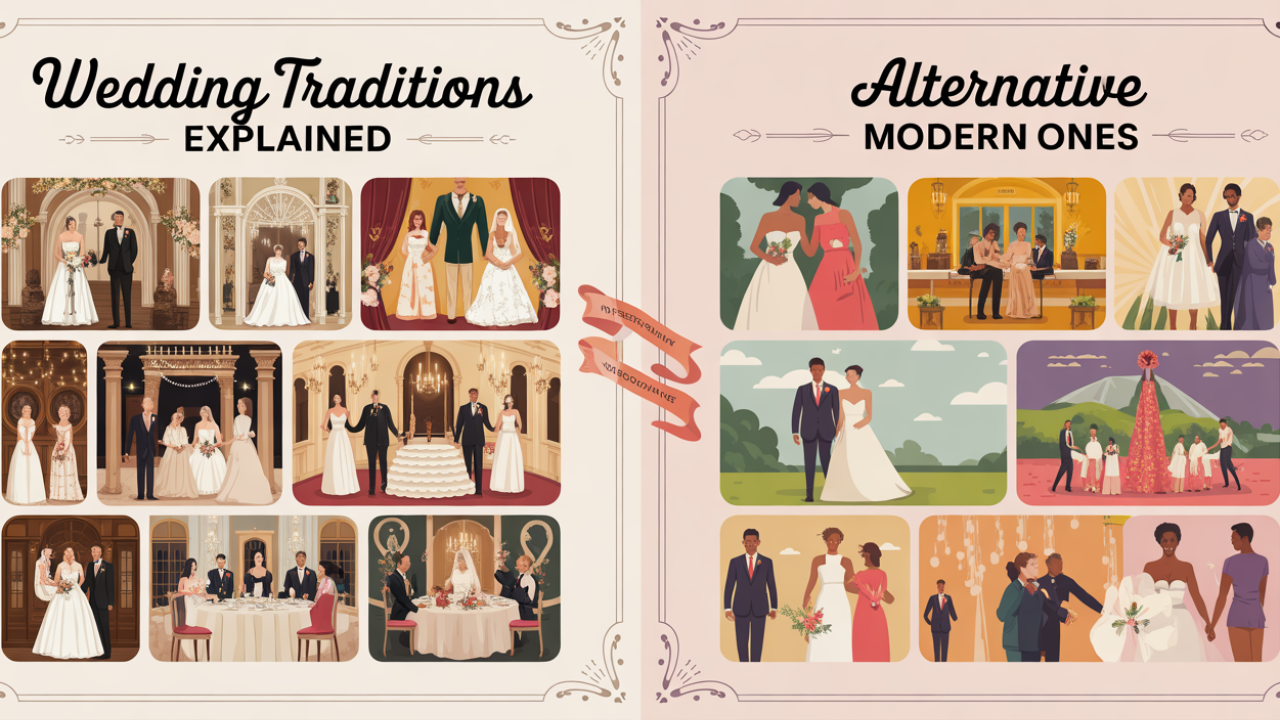
Disclosure: This post may contain affiliate links and advertisements. I may earn a commission at no additional cost to you. Content is supported with Ai and is for entertainment purposes only.
Open to Traditions, However You Can Choose to Not Bound by Them
I’m open to traditions — I really am. I just didn’t grow up in a family where things were done “one right way.” No rigid scripts, no pressure to repeat something simply because it’s always been done. For me, weddings feel most beautiful when they’re rooted in intention, not obligation.
If you feel the same, this guide is for you. We’re walking through well-known wedding traditions, where they came from, what they symbolize, and — most importantly — how couples are thoughtfully reimagining them today. You don’t have to reject tradition entirely to make your wedding feel modern. You just get to decide what fits.
Walking Down the Aisle: From Ownership to Choice
Traditionally, the aisle walk symbolized the bride being “given away” by her father. While many families now view this as a loving moment rather than ownership, the history can still feel misaligned for some couples.
Modern weddings reframe the aisle as a moment of arrival, not transfer. It’s about stepping into a shared future, supported — not handed over.
Practical examples:
• Walking in together as a couple
• Being escorted by both parents or chosen loved ones
• Walking solo as a symbol of independence and intention
Ideas to browse later: aisle décor petals, ceremony runners, handheld florals
The Ceremony Script: From Formal Language to Personal Vows
Traditional ceremony scripts often include language that feels stiff or outdated, especially for couples who value emotional honesty and equality.
Modern couples are choosing ceremonies that sound like them. This doesn’t mean casual or unserious — it means intentional, warm, and real.
Practical examples:
• Writing custom vows that focus on values and partnership
• Asking an officiant to adapt wording to reflect equality
• Including a short story about your relationship journey
Ideas to browse later: vow books, keepsake journals, ceremony script holders
Wedding Party Roles: From Rules to Real Relationships
Traditionally, wedding parties followed strict gender roles and matching numbers. Today, those rules are gently fading — and most couples feel relief.
Modern wedding parties are chosen based on connection, not category. Who has supported you? Who feels right standing beside you?
Practical examples:
• Mixed-gender wedding parties
• Uneven numbers without explanation
• Skipping a wedding party entirely and honoring friends in other ways
Ideas to browse later: personalized thank-you gifts, robe alternatives, accessory boxes
Attire Traditions: From “Should” to Self-Expression
White dresses, black tuxes, matching bridesmaids — none of these are requirements, even if they’re still beautiful options.
Modern wedding attire is about how you want to feel, not how you’re expected to look.
Practical examples:
• Non-white dresses or multiple outfit changes
• Guests encouraged to wear colors instead of strict palettes
• Comfortable footwear prioritized over formality
Ideas to browse later: bridal flats, garment bags, jewelry organizers
Reception Rituals: From Performance to Presence
Many traditional reception moments — choreographed dances, bouquet tosses, garter rituals — can feel performative rather than joyful.
Modern alternatives focus on shared experiences instead of spotlight moments.
Practical examples:
• Inviting everyone to the dance floor for the first dance
• Replacing bouquet tosses with gratitude moments
• Hosting shared activities like photo stations or conversation cards
Ideas to browse later: table conversation cards, photo booth props, signage stands
Family Involvement: From Obligation to Invitation
Traditionally, family roles were rigid and hierarchical. Today, couples are redefining family involvement to reflect real relationships.
Modern weddings treat family participation as an invitation, not a requirement.
Practical examples:
• Loved ones reading during the ceremony
• Multiple parents walking or speaking
• Honoring chosen family alongside relatives
Ideas to browse later: framed readings, ceremony programs, memory table décor
Wedding Timelines: From Packed Schedules to Breathing Room
Traditional weddings often follow tightly packed schedules with little room to pause. Many couples now crave something slower and more connected.
Modern timelines prioritize presence over productivity.
Practical examples:
• Fewer formal moments, more mingling
• Long cocktail hours with seating and conversation
• Ending earlier to preserve energy and joy
Ideas to browse later: lounge seating accents, soft lighting, end-of-night favors
FAQ: Wedding Traditions & Modern Choices
Do we have to explain our choices to guests?
No. Thoughtful choices usually speak for themselves.
Is skipping traditions disrespectful?
Not when your choices are rooted in intention and care.
Can we blend old and new traditions?
Absolutely — that’s often where the most meaningful weddings live.
What if family expectations differ from ours?
Clear communication and gentle boundaries go a long way.
Will guests notice what we skip?
They’ll notice how the wedding feels more than what’s missing.
Conclusion: Tradition Can Be an Embellishment & Not a Test
Wedding traditions aren’t rules to pass or fail. They’re tools — meant to support meaning, not override it. When a tradition resonates, keep it. When it doesn’t, you’re allowed to reshape or release it.
If no one in your family is especially traditional, you have a rare gift: freedom. Freedom to design a wedding that reflects who you are, how you love, and what matters now.
The most memorable weddings aren’t the ones that check every box. They’re the ones that feel honest, welcoming, and deeply human — the kind where everyone leaves saying, That felt like them.
And that’s a tradition worth starting. 💛
Wishing you the best on your beautiful wedding day!
Warmly,
Jenna